Cardiovascular Longevity Assessment in Beverly Hills

Our Approach to Cardiovascular Longevity Assessments
A cardiovascular longevity assessment is an advanced, physician-led evaluation of your heart, blood vessels, metabolic health, and cardiovascular fitness. Dr. Omeed Warej combines cardiology expertise with advanced diagnostics, including cardiopulmonary exercise testing (CPET), vascular imaging, advanced lipid testing, EKGs, and echocardiography, to create a more complete picture of your cardiovascular health.
The cardiovascular longevity assessment is a standalone specialty service available to patients on an à la carte basis, whether or not they are enrolled in a California Heart & Health membership. It can also serve as a natural starting point for patients considering ongoing cardiovascular or concierge care.
Dr. Warej is double board-certified in Internal Medicine and Cardiovascular Disease and completed his residency and cardiovascular fellowship at Cedars-Sinai Medical Center. He graduated summa cum laude from UC Berkeley and earned his medical degree from the David Geffen School of Medicine at UCLA. His clinical and research experience allows him to approach cardiovascular prevention from both an internal medicine and subspecialty cardiology perspective.
He aims to understand your cardiovascular health before disease becomes clinically apparent. Rather than relying on a single measurement, Dr. Warej evaluates cardiac structure and function, vascular health, exercise capacity, metabolic and lipid risk, and other relevant biomarkers together. The result is a physician-authored assessment that connects the findings and identifies which interventions may have the greatest impact on your long-term health.
This makes the assessment particularly appropriate for patients seeking the best cardiovascular risk assessment in Beverly Hills who want more than a routine heart screening.
Should I Get a Cardiovascular Longevity Assessment?
You do not need to have a known heart condition to benefit from a deeper cardiovascular evaluation. Consider an assessment if you:
- Have high blood pressure, high cholesterol, elevated ApoB, or other cardiovascular risk factors
- Have a strong family history of heart disease, heart attack, stroke, or sudden cardiac death
- Want a more comprehensive heart screening than a standard physical provides
- Exercise regularly but want objective measurements of your cardiovascular fitness
- Have noticed a decline in exercise capacity or unexplained changes in performance
- Are interested in measuring your VO2max and establishing individualized training zones
- Have metabolic concerns such as insulin resistance, elevated blood sugar, or excess weight
- Want to understand your cardiovascular health before symptoms develop
- Are taking cholesterol, blood pressure, or other cardiovascular medications and want a deeper assessment of your risk
- Want a baseline measurement that can be tracked as part of a long-term prevention strategy
If you are looking for the best heart disease prevention doctor in Beverly Hills, you may find this type of proactive assessment particularly valuable because cardiovascular risk can develop silently for years before producing noticeable symptoms.
What to Expect During a Cardiovascular Longevity Assessment
The assessment combines advanced cardiovascular testing, vascular imaging, laboratory analysis, and physician interpretation into one integrated evaluation.
Your assessment may include:
Measures the heart's electrical activity and identifies abnormalities in rhythm or conduction.
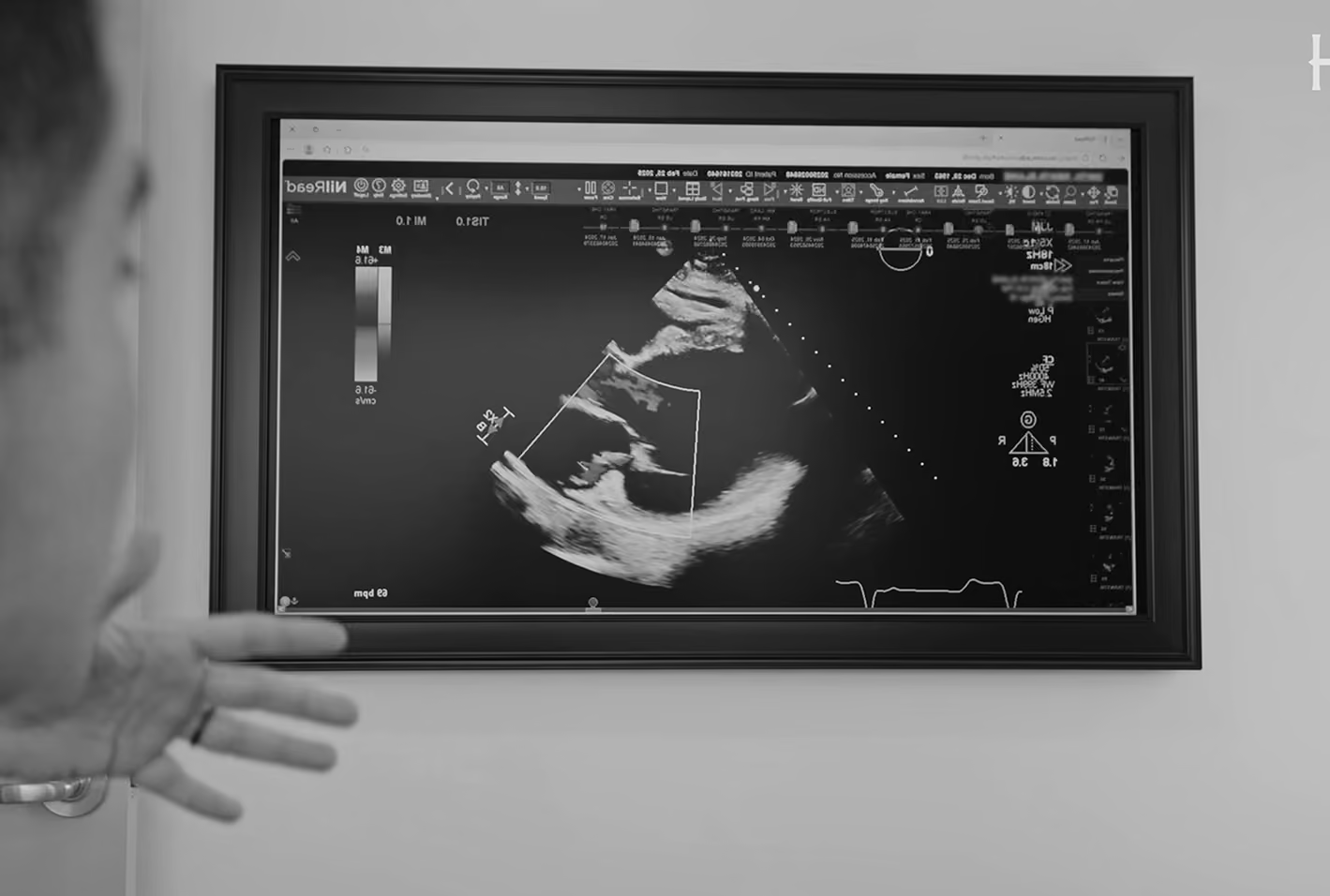
Uses ultrasound to evaluate heart structure and function, including cardiac chambers, valves, and pumping function.
Evaluates the heart during exercise to assess for evidence of ischemia, abnormal blood pressure response, and other cardiovascular abnormalities.
Directly measures VO2max, anaerobic threshold, ventilatory efficiency, oxygen pulse, respiratory exchange ratio, and other measures of cardiopulmonary performance.
Evaluates vascular endothelial function, an important marker of vascular health.
Measures arterial wall thickness to help identify evidence of subclinical atherosclerosis.
Evaluates the carotid arteries, abdominal aorta, and peripheral arteries for evidence of vascular disease or aneurysm.
Includes ApoB, Lp(a), LDL particle number, oxidized LDL, hs-CRP, and Lp-PLA2 to provide a deeper assessment of cardiovascular risk.
May include metabolic, inflammatory, thyroid, hormone, and micronutrient markers based on your individual risk profile.
Provides additional information about body composition and metabolic health.
Dr. Warej integrates the findings into a written report and prioritizes practical interventions based on your individual risk profile.
Provides an opportunity to review findings, discuss recommendations, and refine your prevention strategy.
When appropriate, additional testing such as a coronary calcium scan in Beverly Hills or coronary CT angiography can be coordinated through partner imaging centers.
FAQs About Cardiovascular Longevity
At what age should I consider a comprehensive cardiovascular risk assessment if I feel healthy?
There is no single age at which everyone needs advanced cardiovascular testing. It can be particularly valuable in your 40s and beyond, or earlier if you have a strong family history of premature heart disease, high cholesterol, hypertension, diabetes, metabolic risk factors, or other indicators of elevated cardiovascular risk. Dr. Warej can determine which tests are appropriate based on your individual history.
What cardiovascular tests can detect heart disease before I have symptoms?
Several tests can provide information about cardiovascular disease before symptoms develop. Advanced lipid testing can identify risks that a standard cholesterol panel may miss, while CIMT and vascular ultrasound can evaluate early changes in the arteries. An echocardiogram evaluates cardiac structure and function, and CPET measures cardiovascular fitness and exercise response. Depending on your risk profile, coronary calcium scoring or coronary CT angiography may also be appropriate.
Is a coronary calcium scan enough to determine my risk of heart disease?
No. A coronary calcium scan measures calcified plaque in the coronary arteries, but it does not provide a complete picture of cardiovascular risk. It can be useful when clinically appropriate, but Dr. Warej may also consider blood pressure, advanced lipid markers such as ApoB and Lp(a), inflammatory markers, vascular imaging, exercise capacity, family history, and other factors when assessing your overall risk.
Can I have cardiovascular disease even if my cholesterol and standard tests are normal?
Yes. Standard cholesterol measurements and routine testing do not capture every factor associated with cardiovascular risk. Some patients may have elevated ApoB or Lp(a), early vascular changes, impaired endothelial function, or reduced exercise capacity despite otherwise reassuring routine results. A more comprehensive assessment can identify risks that may not be apparent from standard screening alone.
What does a VO2max test tell me about my cardiovascular health and longevity?
A directly measured VO2max provides an objective measure of how effectively your body uses oxygen during exercise and is an important indicator of cardiorespiratory fitness. CPET also measures anaerobic threshold, ventilatory efficiency, oxygen pulse, and other physiologic responses. These measurements can help identify limitations in cardiovascular or cardiopulmonary performance and establish individualized training zones.
What should I do if I have a strong family history of heart disease but no symptoms?
A strong family history can justify a more individualized assessment even when you feel healthy. Depending on your age, history, and other risk factors, Dr. Warej may recommend advanced lipid testing, EKG, echocardiography, vascular imaging, CPET, genetic assessment, coronary calcium scoring, or other testing to better define your risk and determine an appropriate prevention strategy.