
Our Approach to Athlete Cardiac Assessments
An athlete cardiac assessment is a comprehensive, cardiologist-led evaluation designed to evaluate the athletic heart, identify potential cardiovascular risks, and establish objective performance measures. Dr. Omeed Warej combines sports cardiology expertise with advanced testing, including EKG, echocardiography, stress echocardiography, extended cardiac monitoring, and CPET with metabolic cart testing.
Our athlete cardiac assessment is available as a standalone specialty service on an à la carte basis, whether or not you are a California Heart & Health member. It is designed for recreational and competitive athletes who want a deeper understanding of their cardiovascular health, athletes seeking formal clearance, and individuals experiencing symptoms or unexplained changes in performance.
Dr. Warej is double board-certified in Internal Medicine and Cardiovascular Disease and completed his residency and cardiovascular fellowship at Cedars-Sinai Medical Center. His training in cardiovascular medicine allows him to evaluate athletic performance and cardiovascular risk from the perspective of a subspecialty cardiologist while considering the unique physiologic adaptations that occur with regular training.
His approach recognizes that athletes can have cardiovascular findings that differ from those of the general population. Testing is therefore interpreted in the context of training history, exercise volume, recovery, symptoms, family history, and performance trajectory. The goal is to distinguish normal athletic adaptation from findings that warrant further evaluation while identifying opportunities to improve cardiovascular fitness and performance.
For athletes seeking an athlete cardiac assessment in Beverly Hills, the evaluation provides both a deeper understanding of cardiovascular health and objective data that can inform training, recovery, and long-term performance.
Should I Get an Athlete Cardiac Assessment?
You do not need to be a professional athlete to benefit from a comprehensive cardiac evaluation. Consider an assessment if you:
- Are a master athlete age 40 or older
- Participate in endurance sports such as running, cycling, triathlon, or swimming
- Want formal sports cardiology clearance before beginning or increasing intensive training
- Have experienced palpitations, an unusually rapid heartbeat, dizziness, or fainting during or after exercise
- Have noticed an unexplained decline in endurance or exercise performance
- Have reached a performance plateau despite consistent training
- Have a personal or family history of heart disease, cardiomyopathy, arrhythmias, or sudden cardiac death
- Want objective measurements of VO2max and anaerobic threshold rather than estimates from a wearable device
- Want individualized Zone 2 and Zone 3 training prescriptions based on your actual physiology
- Want to understand whether changes in exercise capacity reflect training, recovery, or an underlying cardiovascular issue
If you are looking for cardiac clearance for athletes in Beverly Hills, you can benefit from our physician-led evaluation that considers both cardiovascular safety and the demands of your particular sport.
What to Expect During an Athlete Cardiac Assessment
The assessment combines a comprehensive sports cardiology evaluation with cardiac imaging, electrical testing, cardiopulmonary performance testing, vascular assessment, and athlete-calibrated laboratory analysis.
Your assessment may include:
Dr. Warej reviews your medical and family history, training history, exercise load, recovery, symptoms, and performance trajectory.
Identifies cardiovascular factors that may affect training or require additional evaluation.
Evaluates the heart's electrical activity using athlete-specific interpretation criteria that account for normal physiologic adaptations to training.
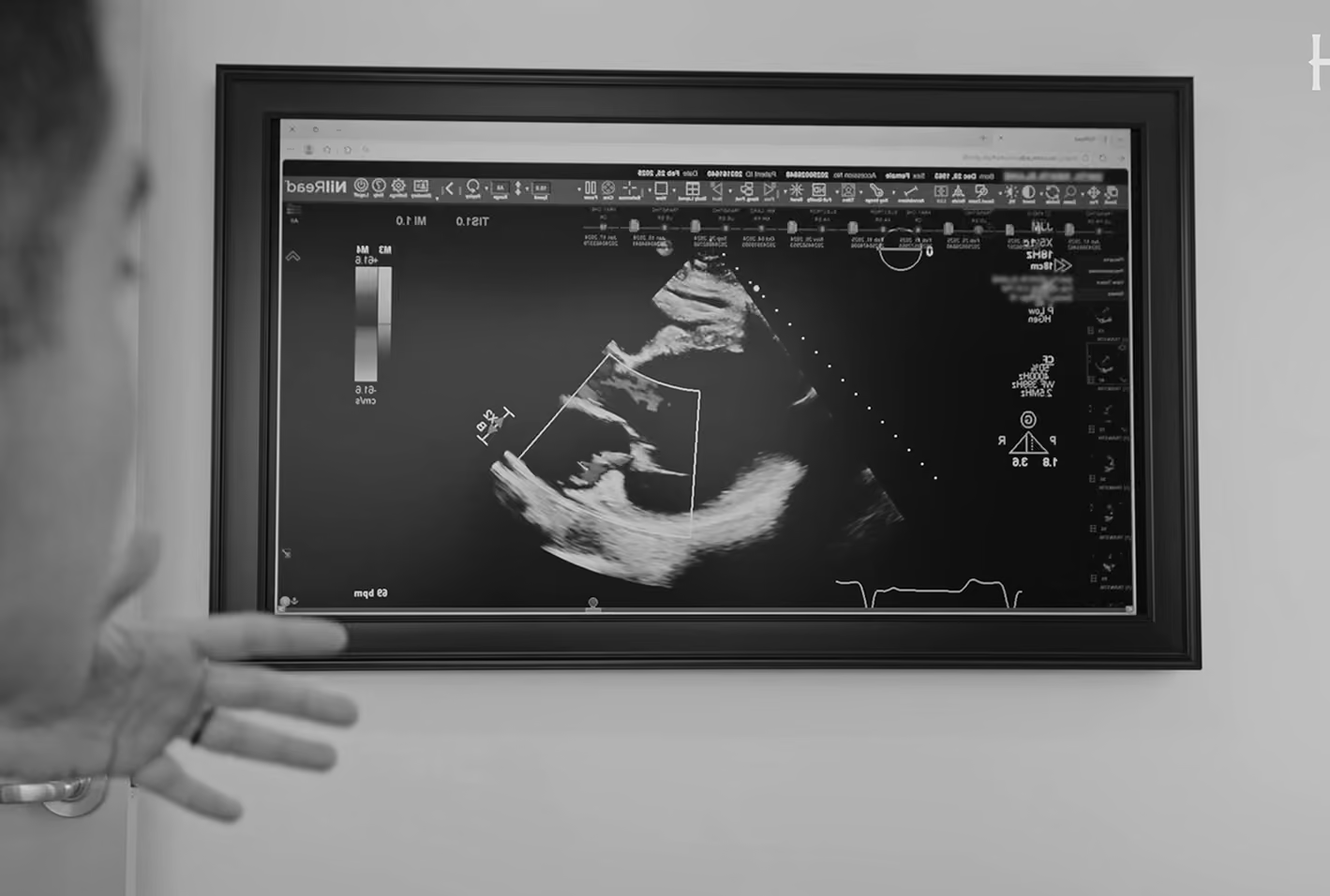
Evaluates cardiac structure and function, including global longitudinal strain (GLS), which can provide additional information about myocardial function.
Evaluates the heart during exercise for ischemia, blood pressure response, and chronotropic response.
Directly measures VO2max, anaerobic threshold, ventilatory efficiency, oxygen pulse, respiratory exchange ratio, and breathing reserve.
Dr. Warej evaluates the complete CPET response to identify potential cardiovascular, pulmonary, or exercise-related limitations.
When clinically indicated, extended cardiac monitoring with a Bardy CAM patch for 7–14 days can evaluate intermittent palpitations and suspected arrhythmias.
CIMT, carotid ultrasound, and peripheral vascular ultrasound can evaluate vascular health and evidence of subclinical atherosclerosis.
May include advanced lipids, iron studies, CBC, metabolic markers, hormones, thyroid testing, and micronutrients.
Bioelectrical impedance testing is interpreted in the context of training load, performance goals, and other clinical findings.
Actual anaerobic threshold measurements are used to establish individualized Zone 2 and Zone 3 training targets.
A clinical nutritionist can evaluate fueling, protein intake, carbohydrate periodization, meal timing, hydration, and recovery in the context of your testing.
We integrate findings into a physician-authored plan, with sports cardiology clearance documentation provided when appropriate.
Provides an opportunity to review findings, answer questions, and refine your training, recovery, or cardiovascular plan.
Additional testing may be recommended based on your symptoms, history, and results, including genetic screening, in-home sleep testing, coronary calcium scoring, coronary CTA, or extended cardiac monitoring.
FAQs About Sports Cardiology
How do I find the best sports cardiologist in Beverly Hills for an athlete with a family history of sudden cardiac death?
Athletes with a family history of sudden cardiac death may benefit from a comprehensive sports cardiology evaluation rather than relying on a basic physical or standard screening. Depending on the individual's history, evaluation may include an EKG, echocardiography, exercise testing, extended rhythm monitoring, advanced imaging, or genetic screening. Dr. Warej evaluates these findings in the context of the athlete's age, sport, training history, and family history.
What is included in sports cardiology clearance in Beverly Hills?
Sports cardiology clearance generally involves a detailed cardiovascular history and physical examination, review of symptoms and family history, and testing when clinically indicated. For athletes with risk factors or concerning symptoms, Dr. Warej may use EKG, echocardiography, stress testing, CPET, or extended cardiac monitoring to determine whether additional evaluation is appropriate before intensive athletic participation.
What does an athlete heart screening in Beverly Hills look for?
An athlete heart screening evaluates whether cardiovascular findings are consistent with normal athletic adaptation or whether they warrant further investigation. It can assess cardiac structure and function, heart rhythm, exercise response, blood pressure response, cardiovascular fitness, and other risk factors. The appropriate testing depends on the athlete's age, training demands, symptoms, and personal and family history.
Is an exercise stress test the same as an exercise treadmill stress test for athletes?
An exercise treadmill stress test generally evaluates the heart's response to progressively increasing exercise, including heart rhythm, blood pressure, and symptoms. A stress echocardiogram adds cardiac ultrasound to the evaluation, while CPET uses a metabolic cart to directly measure oxygen consumption and other cardiopulmonary performance metrics. The appropriate test depends on what the physician is trying to evaluate.
When should an athlete have cardiovascular screening in Beverly Hills if they have no symptoms?
There is no single screening schedule appropriate for every athlete. A more detailed evaluation may be particularly appropriate for masters athletes, high-volume endurance athletes, athletes with a strong family history of cardiovascular disease or sudden cardiac death, or those beginning substantially more intensive training. A sports cardiologist can determine whether advanced testing provides meaningful information based on the athlete's individual risk.
Can CPET determine my VO2max and training zones more accurately than a smartwatch?
A clinical CPET with a metabolic cart directly measures oxygen consumption during exercise rather than estimating VO2max from wearable data. It also identifies anaerobic threshold, ventilatory efficiency, oxygen pulse, and other physiologic responses. These measurements can be used to establish individualized training zones based on the athlete's actual physiology.